
2021 PCT Seminar Web Series
July 12 to August 2, 2021
Location
Credits
This is a Non-CLE Event - Registration is closed for this event.
Registration
2021 Virtual Patent Cooperation Treaty Seminar
This live, multi-day webinar series offers a deeper “nuts and bolts” introduction to the Patent Cooperation Treaty. The program consists of eight (8) live online sessions featuring experienced practitioners, and representatives from the USPTO and WIPO, plus additional online resources and homework, and networking events that will help you learn about recent updates and frequently performed tasks, tools and resources, strategies, and best practices.
The program is focused primarily on the important PCT work carried out by paralegals, paralegal managers, and legal staff. Because attorneys are ultimately responsible for instructing staff and the work they perform, the Series welcomes and encourages attorney attendance. Session materials and discussions have proven to be helpful to all attendees, including attorneys, paralegals, patent agents, portfolio managers, and administrative assistants. IMPORTANT NOTE: AIPLA has a member category at a discounted rate for paralegals, docketing clerks, legal assistants, and technical advisors. Such professionals can join AIPLA and take advantage of the discounted member rate of $195.
Program Topics:
Week One - Live sessions on Monday, July 12
Overview of the PCT System
Priority Claiming Under the Paris Convention and the PCT
Incorporation by Reference, Restoration of the Right of Publicity, Reinstatement of Rights
ePCT Overview and Live Demo
Strategies: Effective use of ePCT
Week Two - Live sessions on Monday, July 19
Filing International Application under PCT
Strategies: Choosing a Receiving Office
Signature Requirements, Agents, Common Representatives, Withdrawals, and Recording Changes
Networking Session
Week Three - Live sessions on Monday, July 26
Amending an International Application
Strategies: Amending Under Art. 19 and Art. 34
Fixing Mistakes and Best Practices: International and US National Phase and US National Phase Applications
Entry Into the National Stage
Strategies: National Phase Entry Considerations
Week Four - Live sessions on Monday, August 2
PCT Regulations Changes, Updates, Near-Future Plans
International Work Sharing and Cooperative Programs
Closing Networking Session
Speakers
-
 Drabnis, Mary
Phelps Dunbar LLP | Attorney
Mary Drabnis is an attorney at Phelps Dunbar LLP. She has been drafting and filing patent applications on a variety of different subjects, primarily on chemical inventions, for more than 20 years. Mary worked as a technical consultant and then as a Patent Agent before attending law school. Ms. Drabnis received her J.D. from Louisiana State University. She earned a Ph.D. in Chemistry from the University of Southern California, and her Bachelor's degree in Chemistry from Rutgers University (New Brunswick) -
 Bardini, Ann
WIPO | Senior Business Analyst
Ann Bardini, a national of the United Kingdom, is Senior Business Analyst at the World Intellectual Property Organization (WIPO) where she has worked since 1990. As Head of the PCT Functional Support Section, she was responsible for the specification of the business requirements, process re-engineering and deployment strategy for the International Bureau’s electronic processing system that led to a fully paperless environment for PCT Operations at WIPO. -
 Guetlich, Mark
Global IP Group, PLLC | Founder
Mark Guetlich is founder of the Global IP Group, PLLC, in Seattle, Washington, functioning as a fractional General Counsel or Chief IP & Licensing Counsel for Small & Medium Enterprises (SMEs) that require tailored virtual legal teams, global legal counseling & conflict resolution, and portfolio strategies during acquisitions & bankruptcy. Mr. Guetlich is the former Secretary of the Board of Directors for the American Intellectual Property Law Association (AIPLA) and has served in government and industry positions including Senior Counsel for International Policy and Government Affairs at the USPTO; VP Managing Director of Patents at the SAP AG headquarters in Walldorf, Germany; and Director of International Patents and Licensing for Microsoft in Redmond, Washington. -
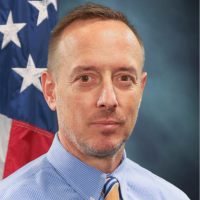 Neas, Michael
USPTO | Deputy Director of the International Patent Legal Administration
Michael Neas is the Deputy Director of the International Patent Legal Administration (formerly PCT Legal) at the United States Patent & Trademark Office. Mr. Neas’ staff provides training on the filing and prosecution of PCT and U.S. national stage applications to inventors, applicants, patent practitioners and paralegals. -
 Reischle-Park, Matthias
WIPO | Deputy Director, PCT Legal Division
Matthias Reischle, a national of Germany, is Deputy Director of the PCT Legal Division of the World Intellectual Property Organization (WIPO). Matthias holds a degree from the University of Constance, Germany (1993), and a LL.M in European Legal Studies from the College of Europe, Belgium (1994). After qualifying to practice law in Germany in 1996, he worked as a legal adviser for the International Labour Organization in Geneva. -
 Malek, Mark
Widerman Malek | Managing Partner
Mark Malek focuses his practice on representing clients before the United States Patent and Trademark Office and counseling inventors and businesses on various intellectual property strategies. Mark enjoys working with his clients to understand their long term goals and tailoring their intellectual property strategies to help achieve those goals.
News
-
 IP Organizations Urge Congress to Extend USPTO Fee-Setting Authority and Restore Advisory Committee Operations
September 28, 2026
Alexandria, VA. September 28, 2026 – The American Intellectual Property Law Association (AIPLA), Intellectual Property Owners Association (IPO), and International Trademark Association (INTA) urge the Senate IP Subcommittee to support an extension of the USPTO's fee-setting authority under Section 10 of the America Invents Act and to ensure vacancies on the Patent and Trademark Public Advisory Committees are filled promptly. -
 AIPLA Files Supreme Court Amicus Brief in RiseandShine v. PepsiCo
September 18, 2026
Alexandria, VA. September 15, 2026 – The American Intellectual Property Law Association (AIPLA) filed an amicus brief in RiseandShine Corp. v. PepsiCo, Inc., a case before the Supreme Court of the United States. -
 AIPLA Joins IPO and INTA in Urging Extension of USPTO Fee-Setting Authority
September 2, 2026
Alexandria, VA. September 1, 2026 – The American Intellectual Property Law Association (AIPLA) joined the Intellectual Property Owners Association (IPO) and the International Trademark Association (INTA) in a letter to Congress supporting the extension of the USPTO’s fee-setting authority, which is set to expire on September 16, 2026. The organizations emphasized the importance of this authority in enabling the USPTO to fund operations, modernize its systems, and maintain efficient patent and trademark examination processes. -
.png?sfvrsn=9d645e3f_0 "USPTO") AIPLA Comments on Ex Parte Reexamination Requirements
AIPLA Comments on Ex Parte Reexamination Requirements
August 27, 2026
Alexandria, VA. August 21, 2026 – The American Intellectual Property Law Association (AIPLA) submitted comments in response to the USPTO’s Notice of Proposed Rulemaking proposing to require identification of all real parties-in-interest (RPIs) in third-party ex parte reexamination requests. -
 AIPLA Comments to the Copyright Office on Alternative Fee Structures for Registration
July 6, 2026
Alexandria, VA. June 24, 2026 – The American Intellectual Property Law Association (AIPLA) submitted comments on the U.S. Copyright Office's Notice of Inquiry regarding alternative copyright registration fee structures.