
Innovate Articles
A Push for the Standardization of Chemical Scope in Patent Specifications
Aliza Panjwani
A fundamental component of conducting patentability and freedom-to-operate searches is generating and searching for like terms for keywords provided in an invention disclosure form. Traditional methods for finding alternative words, such as synonyms or stemming, may be used to identify all manners of describing mechanical devices or methods. An example search for a housing may be entered into programs such as Derwent, PatSnap, or TotalPatentOne as (hous* OR cover OR enclos* OR shield* OR “outer ”), which may reasonably be expected to return a vast majority of documents describing a housing.
However, chemical inventions can prove particularly cumbersome with respect to deciding if a particular compound, reaction mechanism, or mixture is disclosed in the art owing to an indefinite number of ways to recite identical substances.[1] Consider the exceedingly simple compound shown below as Chemical A:
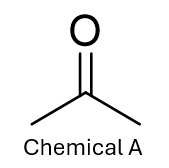
A quick breakdown reveals myriad ways, some more descriptive than others, of broadly disclosing or describing such a substance:
- Chemical formula/name: Applications may represent the compound in plain text or, in rare cases, using stick diagrams. Elements may be recited either in the order of bonding or grouped by repeats, and IUPAC names/CAS numbers may also be preferred.
- For Chemical A, this yields at least CH3COCH3, (CH3)2CO, C3H6O, 2-propanone, dimethyl ketone, acetone, and CAS no. 67-64-1. Depending on the typeface used for the patent or publication, subscripts may be replaced with plain text.
- Functional groups: A genus may be defined as grouping substances containing certain chemical constituents, including but not limited to functional groups, element types, cations, anions, ligands, and so on.
- Chemical A may fall under categories such as ketones, aliphatic hydrocarbons, and/or carbonylated hydrocarbons.
- Physical or chemical state: Properties based on a chemistry or physical behavior of the compound (typically at room temperature) or common uses of the compound may further allow for indirect disclosure.
- For Compound A, this includes organic solvents, volatile organic compounds (VOCs), organic liquids, disinfectants, and the like.
With one of the simplest molecules capable of being disclosed in more than ten ways, it is easy to imagine how this number may quickly grow for compounds containing more than just three element types and sets of bonds. When accounting for polymers of various chain lengths, stereo isometry, acid/base behavior, and charge distribution, the nomenclature available for describing molecules can seemingly increase exponentially with compound size and complexity. In addition, chemical structures may also be anticipated by formulas that are structurally or chemically different but are functionally similar owing to unreactive functional groups or similarly reactive moieties (think of a highly reactive Grignard reagent attached to toluene vs. ethyl; effectively, both will create a bond to a carbon attached to a relatively inert moiety).
Certain standalone software exists to alleviate the search burden, such as PubChem Patents and the Chemical Patent Search by CAS.[2] [3] However, limiting input search terms to phrases or keywords may miss “buried” examples, where unique phrasing or obscure keywords may render location via keyword impossible, such as:
- Ammonia as an “in- or organic solvent”
- A base as a “chemical of a pH of above 7”, particularly when the spaces surrounding “pH” cannot be included in the search
- Butane as “alkanes containing 3–8 carbons”
- Any functional group as “R” in a reaction scheme
In light of this, one may consider an analogous issue with biological sequences. In 1990, the USPTO began requiring submission of a separate sequence listing of any sequence “described as cited art, used in a comparison figure or table, or not claimed or disclosed in the specification, claims, and figures.” By collecting all nucleotide-related data in one central location for each application, searchers could more easily parse through existing chains and consider alternatives.[4]
Recently, artificial intelligence (AI) has been leveraged for the searching process by expanding search terms provided by users to encompass similar or related ideas, which can be compared with hundreds of thousands of applications.[5] When applied to molecules, this will require substantial computing power since AI models must both generate broadened search terms and subsequently compare the widened terms with the landscape of prior art.
One may thus consider an alternative idea of forming a repository for each patent application with respect to chemical formulae to allow for streamlined identification of compounds, moieties, and mixtures disclosed in a patent application. Rather than broadening or enhancing search terms, AI could instead be implemented to generate a near comprehensive list of the substances described in a patent application. Such a solution may solve the search problem at its source, applying the full attention of AI models to each application separately. For example, prior to filing of an application, AI tools could parse the specification for chemical categories/genera and compile a catalogue of allowable substances, which could then be published alongside the application itself (such as in an appendix or via footnotes) or saved separately in Patent Center. An alternative solution may comprise a tool analogous to the WIPO Sequence tool allowing for inventors and/or practitioners to manually generate the “chemical scope sheet” of their application in a standardized fashion.
It is not difficult to imagine a day when the expanse of patents filed in the chemical field forces the USPTO to require a shift in chemical searching practices to both enhance efficiency and ensure truly complete searches.[6] However, even if such a time does not come, it may be worthwhile to consider individual implementation of a chemical scope sheet to reduce the reliance on carefully scripted search terms when reviewing the prior art. Like all technologies, while this may prove taxing to inventors and prosecutors in the chemical and pharmaceutical industries in the short term, continuous training of AI models and the promise of more accurate landscape searches and comprehensive patent applications may prove this undertaking a valuable investment.[7]
[1] Guha, Rajarshi, and Egon Willighagen. "A Survey of Quantitative Descriptions of Molecular Structure." Current Topics in Medicinal Chemistry, vol. 12, no. 18, 2012, pp. 1946-56, https://doi.org/10.2174/156802612804910278. Accessed 8 Apr. 2026.
[2] "PubChem Quick Search." PubChem, pubchem.ncbi.nlm.nih.gov/docs/quick-search. Accessed 8 Apr. 2026.
[3] "Don't Miss Crucial Chemical Patents and Risk Your IP." Chemical Abstracts Service, www.cas.org/solutions/stn-ip-protection-suite/chemical-patent-search. Accessed 8 Apr. 2026.
[4] Jefferson, Osmat A., et al. "Public Disclosure of Biological Sequences in Global Patent Practice." World Patent Information, vol. 43, Dec. 2015, pp. 12-24, https://doi.org/10.1016/j.wpi.2015.08.005. Accessed 7 Apr. 2026.
[5] Setchi, Rossitza, et al. "Artificial Intelligence for Patent Prior Art Searching." World Patent Information, vol. 64, Mar. 2021, https://doi.org/10.1016/j.wpi.2021.102021. Accessed 8 Apr. 2026.
[6] Trager, Rebecca. "News US Chemical Industry Responsible for 25% of the Country's GDP." Chemistry World, 27 July 2022, www.chemistryworld.com/news/us-chemical-industry-responsible-for-25-of-the-countrys-gdp/4016016.article. Accessed 8 Apr. 2026.
[7] "Why Can Searching for Chemical Patents Be So Complex?" IP.com, ip.com/blog/patenting-chemical-formulas-or-chemical-compounds-why-can-searching-for-chemical-patents-be-so-complex/. Accessed 7 Apr. 2026.
I am a third-year patent agent with an educational background in chemistry, physics, astronomy, and optics from the University of Rochester. After working as a patent engineer for Armstrong Teasdale in 2023 conducting patentability searches and maintaining cited art portfolios, I transitioned to Husch Blackwell to gain more experience in prosecution, where I have now worked for two years. I have drafted patent applications/responses and have even contributed to litigation work for over fifty clients at the firm for a breadth of technologies including banking applications, water filters, riflescopes, semiconductors, fabric treatment formulations, etc. In 2023, I passed the USPTO registration exam and in 2025 published my collegiate chemical research in Physical Review B.