
2026 Annual Meeting
In This Section
The 2026 AIPLA Annual Meeting brought together over 1,000 IP professionals from around the world for three days of learning, collaboration, and meaningful connections in Washington, DC. With a strong focus on artificial intelligence, emerging technologies, and the future of intellectual property, attendees gained valuable insights, exchanged perspectives, and built new relationships that will help shape the future of the IP profession.
 President’s Message – Matthew Wagner – Annual Meeting 2026
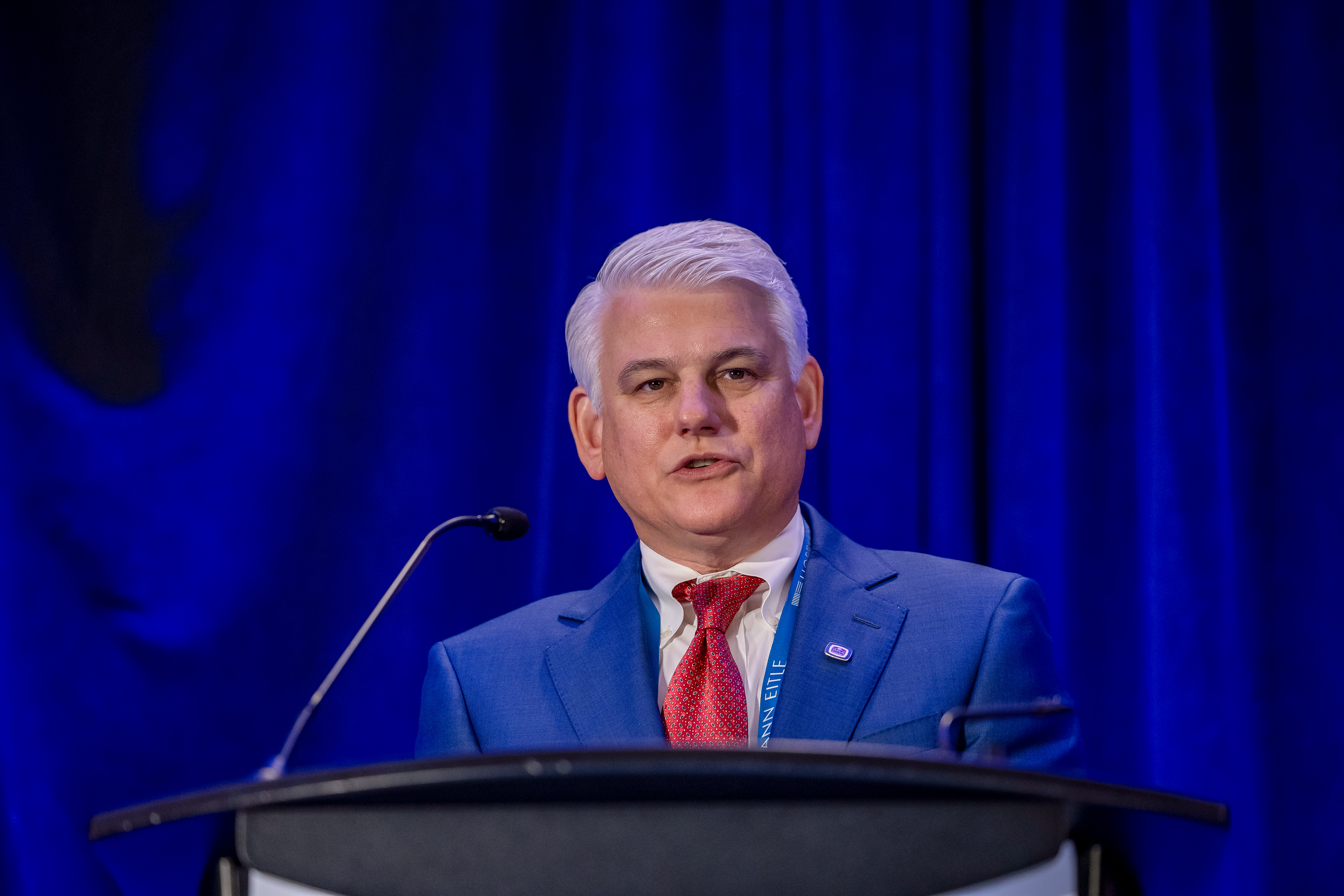
Thank you for a wonderful Annual Meeting in DC, and welcome to AIPLA ’26 –‘27!
Like Sal Anastasi, Kim Van Voorhis, and every president before them, I am humbled and grateful for the opportunity to lead this Association. Sal reminded us all year that AIPLA is “made by you and for you.” He meant it, and he lived it. Under his leadership we listened more closely to our members, tried new formats, and grew stronger as a community. Thank you, Sal.
So what comes next? For me, the answer is predictability.
The people we serve, from inventors and creators to the businesses that invest in them, make long-term decisions. They can make those decisions with confidence only when the rules are clear, applied consistently, and delivered on a timeline they can plan around. That is true whether the question is what can be protected, what infringes, or what a matter will cost. This year, AIPLA will pursue predictability on three fronts.
In the law. Our advocacy remains our strongest tool. We will keep pressing the courts, Congress, and the agencies for clear and stable standards, with patent eligibility at the top of the list, and for a USPTO with the resources to deliver timely, high-quality examination. Our committees are the engine of that work, and they continue to evolve. Our AI Task Force is now a standing AI Law Committee. The IP Support Specialists group is now a full Committee. And a re-vamped Membership Committee will help make sure AIPLA attracts and serves the full breadth of our profession.
Across borders. Our members’ work and their clients’ products move around the world, so our voice must too. Consistent rules across jurisdictions means predictability on a global scale. This month our delegation travels to China to meet with CNIPA and the China IP Society, and we will continue building relationships in Europe, Japan, and Latin America and beyond. We will also deepen our partnership with AIPPI-US to bring the American perspective to harmonization efforts.
In our practice. Predictability is also something we owe one another. Clients deserve realistic estimates, early warning when things change, and advice framed in terms they can act on. The best outcomes come when in-house counsel, outside counsel, agents, and government practitioners work as one team. AIPLA is one of the few places where all of us sit at the same table, and I want us to make the most of it.
None of this works without you. In 2027, AIPLA turns 130. For 130 years, this Association has been built by members who show up. Join a committee, or a second one. Raise your hand for a comment letter, a program, or a subcommittee, and then follow through. Mentor someone newer to the profession. Join us at the Global IP and Trade Summit in Fort Myers in January and the Spring Meeting in Denver in May.
And tell me how we can do better. If you have an idea for making our IP system more predictable, or for making AIPLA more valuable to you, email me at president@aipla.org. I want to hear it.
Looking forward to a productive ’26 –‘27.
Matt Wagner
President
 Opening Plenary with Ivan Arvelo, Director of the National Intellectual Property Rights Coordination Center
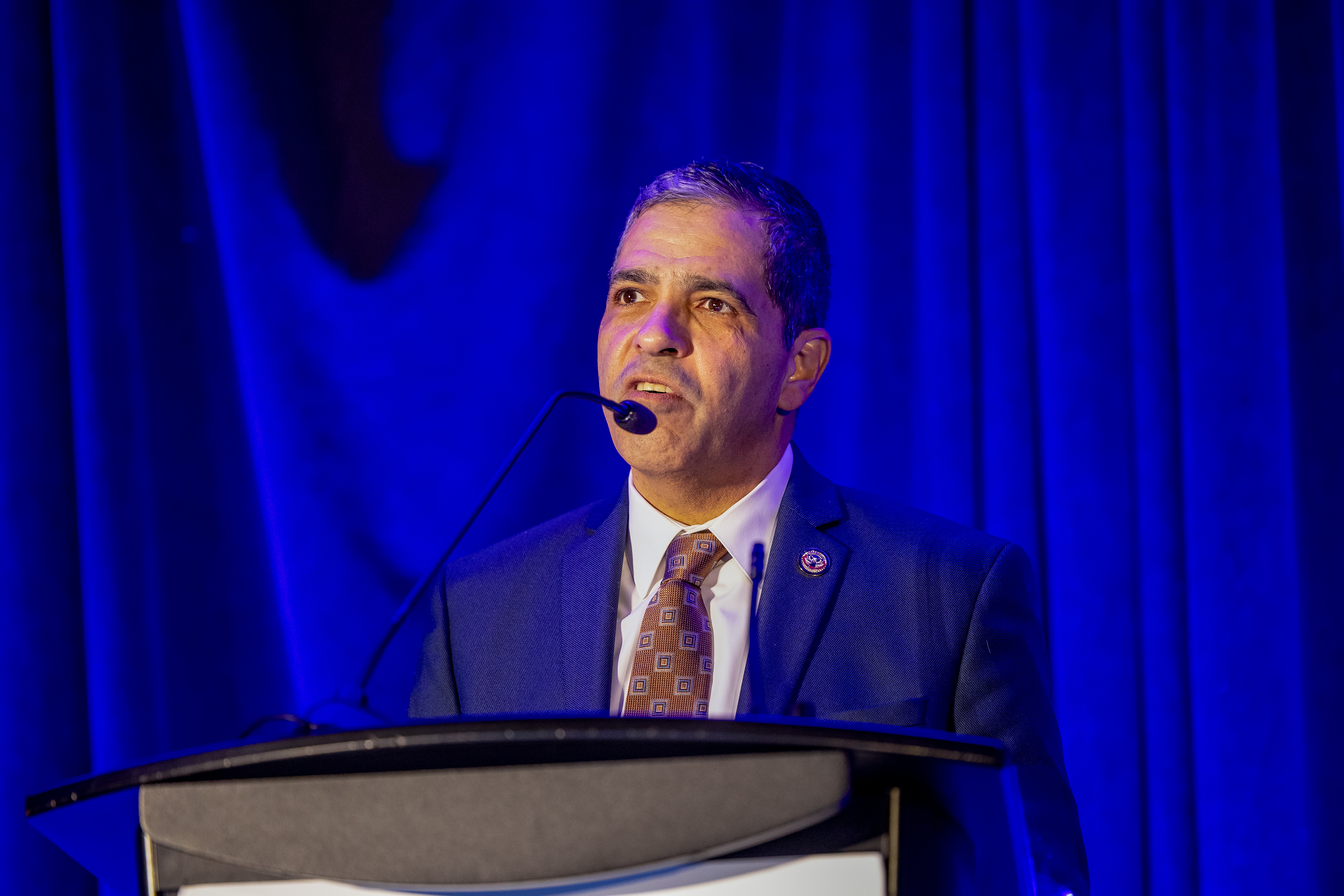
The Opening Plenary of the 2026 AIPLA Annual Meeting featured Ivan Arvelo, Director of the National Intellectual Property Rights Coordination Center, who discussed the evolving threat of intellectual property crime and the importance of collaboration between law enforcement and the IP community. His remarks emphasized that counterfeiting and piracy threaten not only intellectual property rights, but also public safety, legitimate businesses, and trust in global commerce.
Arvelo opened by describing intellectual property as the product of imagination, investment, and the confidence to build something new. He highlighted the complementary roles of IP practitioners and law enforcement: while attorneys help establish and protect the rights supporting innovation, the IPR Center pursues criminal actors who exploit those rights for profit. He stressed that IP crime extends far beyond counterfeit luxury goods and pirated entertainment, reaching hospitals, repair shops, government purchases, and critical supply chains.
Trust was a central theme throughout his remarks. Consumers expect products to be genuine and safe, businesses expect fair competition, and innovators rely on the protection of their work. Counterfeit goods undermine each of those expectations. As Arvelo explained, “IP crime is not a narrow commercial concern. It is a challenge to trust.”
Describing the IPR Center as the federal government’s central hub for coordinating criminal IP enforcement, Arvelo outlined how investigators, prosecutors, customs authorities, international partners, and rights holders work together to connect seemingly isolated leads. A suspicious shipment, an online seller, or a failed product authentication may reveal a broader criminal network when examined alongside other evidence. He reported that, in 2025, IP and illicit trade enforcement efforts resulted in more than 1,200 criminal arrests and seizures of counterfeit and fraudulent goods valued at more than $450 million in manufacturer’s suggested retail price.
One of the most compelling examples involved counterfeit automotive parts, including airbags, brakes, and other safety components. Arvelo explained that products may appear genuine while failing to meet manufacturing or testing requirements, with potentially catastrophic consequences. He highlighted the Automotive Anti-Counterfeiting Council as an example of how manufacturers, legal professionals, safety experts, and investigators can combine their expertise to identify threats and protect consumers.
Arvelo also addressed the increasingly global and digital nature of IP crime. Criminal organizations use online marketplaces, social media, fraudulent shipping documents, and complex financial arrangements to reach consumers and conceal their activities. Responding effectively requires coordination across borders and industries, as well as investigations that identify those sourcing, financing, distributing, and profiting from counterfeit goods.
Speaking directly to IP practitioners, Arvelo encouraged early engagement with law enforcement, prompt reporting of suspicious activity, evidence preservation, and assistance with product authentication. Attorneys and rights holders often possess the information needed to turn an isolated seizure into an investigation capable of disrupting an entire network. He emphasized that criminal enforcement can complement civil remedies and provide another avenue for addressing organized counterfeiting.
The session concluded with a call for shared responsibility in protecting innovation and consumers. As technology and global commerce continue to evolve, Arvelo urged the IP community to strengthen its partnerships with law enforcement, emphasizing that sustained cooperation is essential to protecting trust in products, supply chains, and fair competition.
 Keynote Luncheon Fireside Chat with the Hon. Leonard Stark, Judge of the Court of Appeals for the Federal Circuit
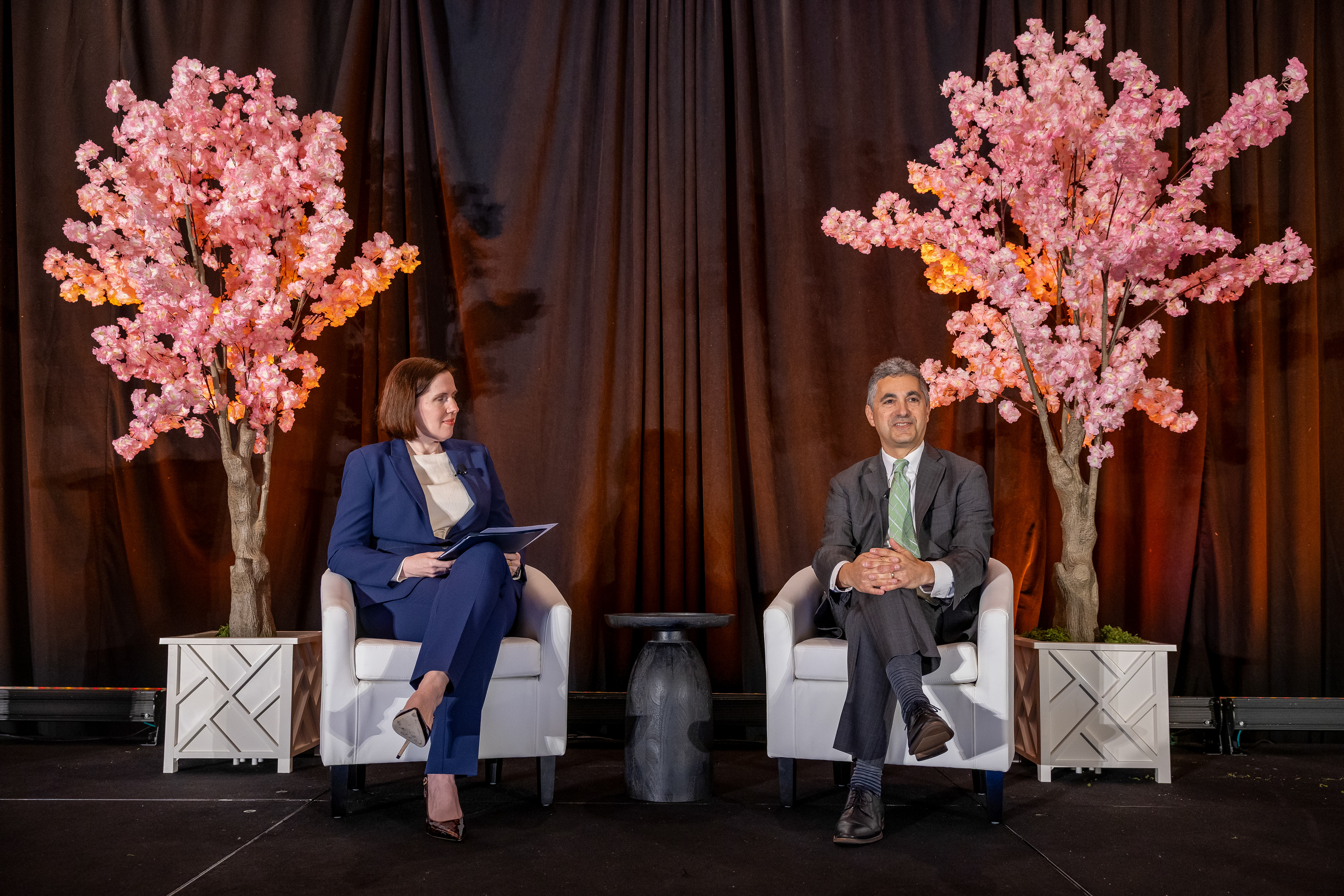
During Day One’s Keynote Luncheon, attendees heard from Judge Leonard Stark of the U.S. Court of Appeals for the Federal Circuit in a fireside chat moderated by Brooke Purinton one of his former law clerks. The conversation explored effective advocacy, his transition from the trial bench to the appellate court, the potential role of artificial intelligence in the judiciary, and the value of mentorship and public service.
Drawing on his experience as a magistrate judge and district judge in Delaware, Judge Stark emphasized that the strongest appellate strategy often begins with winning at the trial level. He observed that lawyers sometimes present arguments that appear directed primarily toward preserving an issue for appeal, rather than persuading the trial court. While acknowledging the need to preserve arguments, he encouraged practitioners to focus on convincing the fact-finder and putting themselves in a position to defend a favorable result on appeal.
Judge Stark identified the amount of time spent considering waiver and forfeiture as one of the most surprising aspects of appellate judging. He explained that determining whether an issue was fairly presented below is often more difficult than he anticipated. Even when an argument is clearly and persuasively developed on appeal, the court must consider whether the lower tribunal had a fair opportunity to address it.
Turning to written advocacy, he praised briefs that focus on a limited number of issues, communicate succinctly, and candidly address weaknesses. As he reminded attendees, “page limits are limits, they’re not floors.” The most helpful briefs, he explained, acknowledge unfavorable facts or authorities and show why the advocate’s position should nonetheless prevail. They also help judges work through how to write an opinion that fairly accounts for competing arguments.
The discussion also addressed the value of oral argument. Judge Stark explained that although argument does not frequently change his anticipated disposition, it regularly helps him develop greater confidence in the outcome and refine the reasoning supporting it. Questions from the bench give counsel an opportunity to address unresolved concerns, while the exchange helps judges determine which issues must be reached. He also highlighted the value of hearing his colleagues’ questions and understanding how they approach the same case.
On AI, Judge Stark offered a candid account of his limited experience with the technology, saying he was not knowingly using it in chambers. He said he understood that the Administrative Office of the U.S. Courts was working on AI tools for the judiciary and anticipated exploring their usefulness if made available. While acknowledging uncertainty about how AI would affect his work, he suggested that it could become a more familiar part of judicial practice in the coming years.
Reflecting on his relationships with law clerks and students, Judge Stark emphasized that effective advocacy does not require a particular personality or courtroom style. He described his own early doubts about becoming a litigator and explained that preparation, authenticity, and experience helped him develop confidence. Through teaching, he seeks to give students opportunities to practice advocacy in a setting where they can experiment, respond to questions, and discover their own approach.
The session concluded with a discussion of public service and professional development. Judge Stark recalled that leaving private practice for the U.S. Attorney’s Office involved a substantial salary reduction but provided significantly greater courtroom experience and responsibility. He encouraged lawyers to consider public service both as a way to contribute and as an opportunity to build skills. Throughout the conversation, he urged practitioners to pursue ambitious goals, exercise good judgment, treat others well, and remain open to new opportunities.
 Morning Plenary: Beyond the Prompt: Building Better AI Workflows for Legal Practice
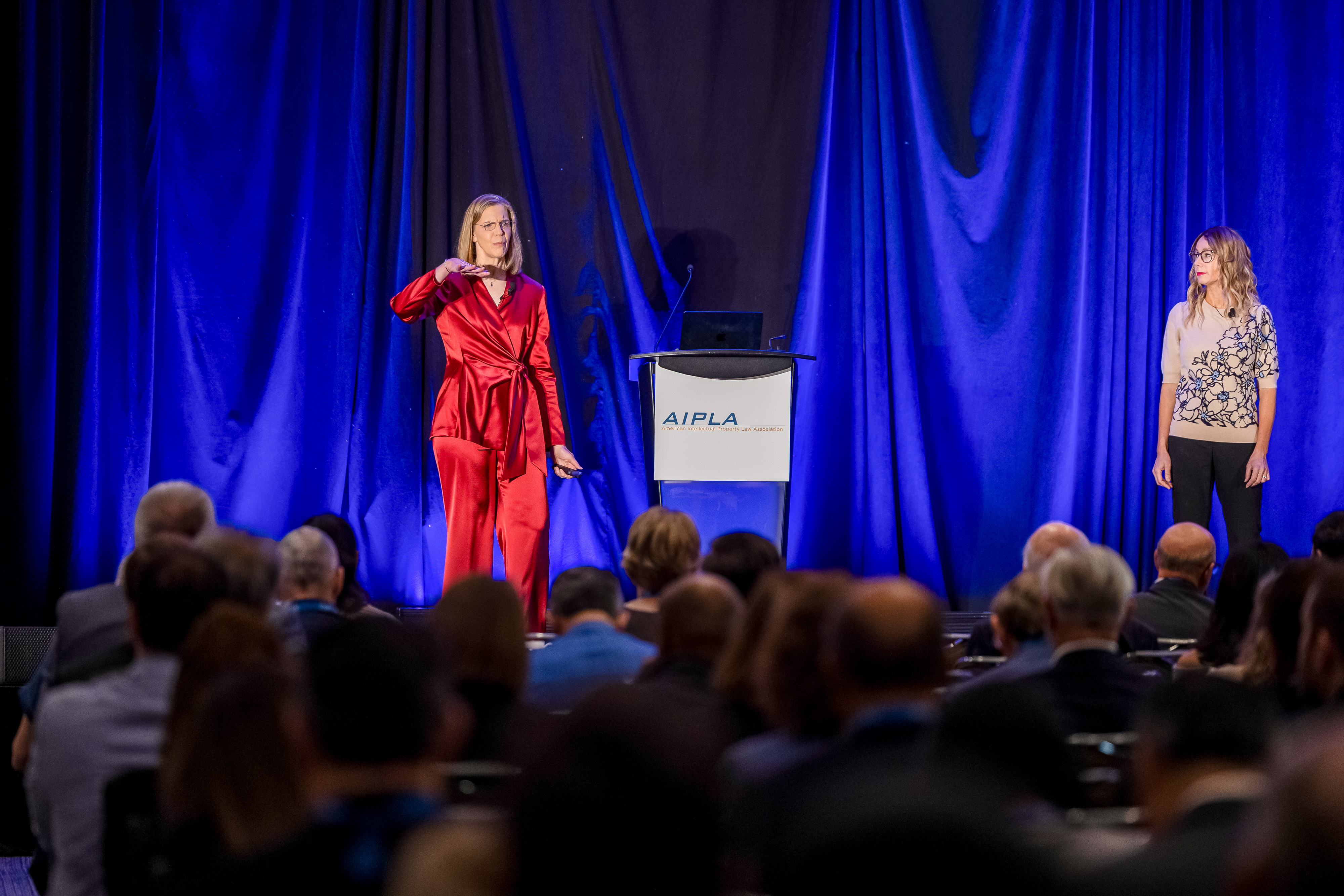
The Morning Plenary of the 2026 AIPLA Annual Meeting brought together speaker Ann McCrackin, an adjunct professor at UNH Franklin Pierce School of Law, and moderator Sarah Knight of Talem IP Law for an interactive workshop on integrating AI into legal practice. Throughout the session, attendees paired with nearby colleagues to work through short exercises, compare approaches, and share their ideas with the room. The format encouraged participants to apply each lesson to their own practices while learning from one another’s experiences.
The workshop began with a practical example: preparing for an initial meeting with a client whose ebook included AI-generated content. The demonstration showed how a general request for background information could become a more useful research assignment by specifying the task, purpose, content, format, and length. Other important instructions included identifying acceptable sources, requesting citations, and directing the system to disclose when information could not be found or a source could not be accessed. Attendees then discussed with their partners what information, sources, and formats would make a client background brief useful in their own practice areas.
The discussion also addressed the groundwork required before using AI for client matters. Practitioners were encouraged to review the platform’s account type, vendor terms, privacy policy, and security protections, together with firm policies, client guidelines, and professional obligations. Understanding how information will be handled was presented as an essential first step in incorporating a tool into practice.
The second portion focused on designing output for verification. A research example involving commentary on copyright protection for works combining human and AI contributions illustrated how prompts could organize sources by category, request supporting quotations and links, and distinguish source statements from the system’s own inferences. Participants worked together to identify instructions that would make summaries easier to check, such as page references for office action rejections, verbatim contract provisions, and page-and-line citations for deposition testimony. Audience contributions also explored comparing contract provisions against approved templates and highlighting differences for attorney review.
Professional judgment was another central theme. A classroom example illustrated how students who correctly evaluated AI licensing options themselves could nevertheless accept unsuitable recommendations when they asked AI to draft a memorandum. The discussion highlighted how a seemingly straightforward drafting request can inadvertently delegate the underlying decision. A more deliberate workflow begins with the attorney’s analysis, uses AI to test that analysis from different perspectives, and then directs the system to draft from the attorney’s conclusions.
A trademark exercise reinforced that distinction by asking attendees to consider how they would prompt AI to prepare a client recommendation letter following review of a search report. The exchange illustrated how an open-ended drafting request could allow the system to choose the advice itself. AI can help organize results, flag potentially relevant marks, and formulate questions, while the attorney retains responsibility for assessing risk and advising the client.
The session concluded with a discussion of reusable “skills”—saved instructions for recurring tasks. Attendees again turned to their partners to identify workflows they could standardize, from client background briefs and prosecution status reports to trademark search summaries and meeting follow-ups. The closing exercise encouraged participants to leave with a practical application for their own work, preserving useful instructions and safeguards while continuing to review every result.
 Keynote Luncheon with the Hon. John A. Squires, Under Secretary of Commerce for Intellectual Property and Director of the USPTO
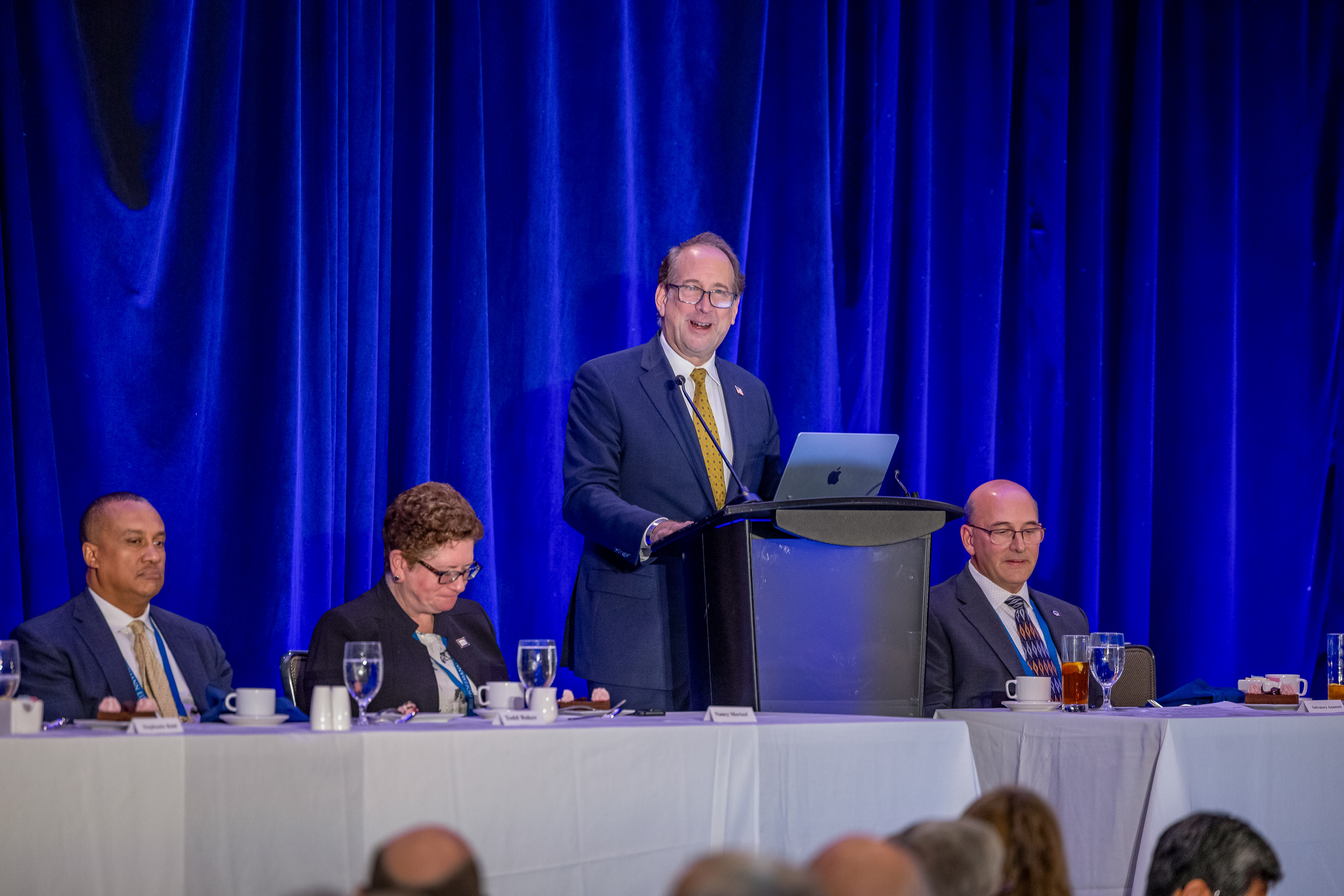
During Day Two’s Keynote Luncheon, attendees heard from John A. Squires, Under Secretary of Commerce for Intellectual Property and Director of the USPTO, on how technology and stronger relationships are reshaping the agency’s work. His return carried special significance: AIPLA’s Annual Meeting had been the setting for his first public address following confirmation a year earlier. Speaking from the same podium, Squires recalled choosing AIPLA for that inaugural appearance and reflected on the year since. His remarks focused on using AI to support human expertise, strengthening connections within the USPTO and with stakeholders, and improving the infrastructure that allows intellectual property to support innovation and commerce around the world.
Returning to the themes of that first address, Squires described the technological transformation he had anticipated as already underway. He characterized AI as a “forcing function” that challenges institutions to reconsider established processes and find better ways to work. For the USPTO, he explained, the opportunity extends beyond productivity to creating more substantive engagement between agency professionals and the applicants they serve.
A central theme was separating administrative work from the legal and technical judgments that require professional expertise. Squires described how reducing burdens associated with application formalities could allow examiners, examining attorneys, and applicants to reach substantive issues sooner. He emphasized that examination should be a collaborative effort to define appropriate rights while preserving the public interest, supported by tools that improve transparency and the record.
Squires highlighted the agency’s LOOP initiative as an example of stronger internal connections. The program links lessons from Patent Trial and Appeal Board proceedings with the examining corps, allowing experience from the review process to inform examination. He described the initiative as connecting two substantial sources of institutional expertise and helping the agency become a more informed, continuously improving organization.
The discussion also covered tools designed to bring potentially relevant prior art into view earlier, assist with reviewing complex biological sequence submissions, and support pre-examination processes through agentic capabilities. Squires presented these efforts as ways to give agency professionals more time for consequential analysis. As he summarized the approach, “Examiners lead, tools support, American ingenuity wins.”
Stakeholder engagement and accessibility were another focus. Squires described efforts to bring marketplace experience into the agency’s development and operations, alongside an expanding regional and community presence. He encouraged attendees to think of the institution as a United States Patent and Trademark “System,” with relationships reaching researchers, entrepreneurs, startups, technology transfer professionals, and innovation communities across the country.
Turning internationally, Squires highlighted recent cooperation with foreign IP offices and discussions in Vienna and Buenos Aires. He emphasized that IP rights support investment, technology transfer, and trade, making coordination among national systems an important part of their practical value. He also discussed the Trilateral work with the European and Japanese patent offices to streamline international assignment processes, identifying June 2027 as a target for implementation.
The address concluded with a call for continued partnership between the USPTO and the IP community. Connecting judges and examiners, engaging stakeholders and local innovation ecosystems, and strengthening international relationships were presented as mutually reinforcing efforts. Looking toward the next generation of innovation, Squires encouraged attendees to help build an institution that learns from experience, responds to the people it serves, and strengthens the system for inventions and technologies still to come.
 Prosecution Panel Describes Daily AI Use, and Where Practitioners Still Draw the Line
Tim Bright, Bright-Line IP
"Ultimately we are all responsible for the work product we produce." — Michael Chernoff, Clerq, AIPLA 2026 Annual Meeting
American Intellectual Property Law Association (AIPLA) second session on AI in patent drafting turned from strategy to practice. Over 45 minutes, the panelists on AIPLA's Patent Prosecution in the Age of AI session described the tools they use every day, from disclosure intake and file-history review to office action agents, and were equally specific about where they do not let AI decide.
The session, held October 30 at the AIPLA 2026 Annual Meeting in Washington, D.C., was moderated by Michael Chernoff (Clerq), a former patent examiner who works on agentic AI patent search. Panelists were Brad Fach (University of North Carolina at Charlotte), who directs the university's technology transfer office; Erica A. Fishel, Ph.D., J.D. (GTC Law Group), a former director of tech transfer with a Ph.D. in molecular biology; and Dennis J. Parad (DLA Piper), a former primary examiner.
Getting Up to Speed
For Fach, whose office supports some 30,000 students and about 3,000 research faculty, AI fills a practical gap. "I can't be an expert in everything," Fach said, describing a homegrown tool that fleshes out invention disclosures before they go to outside counsel, and a third-party tool that runs a patent search, outlines potential claims, and identifies potential licensees. "We've got a patent search, we've got a list of potential targets, we've got draft emails out that would have taken weeks," Fach said of the results.
Fishel described using AI to get up to speed in unfamiliar areas, gathering "a basket of wool together before I knit the application." Parad said a first step is asking AI to "break it down to me as if I was a child" when reviewing dense experimental data, before drawing independent conclusions and searching the state of the art. On general legal platforms versus patent-specific tools, Parad said patent practice is nuanced enough that a focused tool understands the context of a request better than a general one.
Prosecution and File Histories
Parad said AI has saved time in managing global portfolios by assembling the arguments, data, and secondary considerations from prior prosecution so that responses in each jurisdiction stay aligned with strategy. Where it falls short, Parad said, is less in stating falsehoods than in missing the larger reasons behind past decisions. Fach described a skill that translates office actions for academic researchers, and an agent that checks for new office actions daily, parses them, and drafts emails to inventors, sometimes before outside counsel has reported.
Fishel said finding and reusing persuasive language is one area where the tools excel. "AI is way better at doing that than I ever was," Fishel said, describing quoting an examiner's own reasons for allowance in a similar case, and agents customized to a colleague's drafting preferences.
Hallucinations and the Echo Chamber
Asked how they guard against hallucinations, Fishel recalled a draft that included "a quote that was not a real quote," and said that, much as with checking case citations, "I always make sure that what it's quoting is in fact true." The larger risk, Fishel said, is that AI is "an echo chamber in that it doesn't necessarily question your thinking." Parad described setting guardrails on each task and stopping and re-prompting when results drift, and warned that a model asked to find flaws will "find flaws even if there's no validity to it." Fach said, "I think that's where the human judgment layer is really, really important."
Trusted Data and the Limits of Context
Chernoff introduced the Model Context Protocol, which Chernoff likened to an API connecting a frontier model to a data platform the user already trusts. Without such a connection, Chernoff said, a model searching for patents "doesn't have a confirmed source of truth" and is not taking a systematic approach. Chernoff cautioned that even with trusted data, a model asked to compare 20 or 30 references may not read them all because of context and token limits. "It's going to take shortcuts," Chernoff said.
Claims Stay With the Practitioner
On agents, Parad said that in practice "we pump the brakes" once a task moves from gathering information into legal judgment, such as assessing materiality. Chernoff, who said that as a new examiner "I couldn't even imagine" agents parsing disclosures and mapping search results, agreed that "you do need human checkpoints."
The panel was most consistent on claims. Fishel said, "I have a lot of hesitation to trust AI blindly," and that "often the claims that it drafts are far too broad." Parad called claim drafting "the most important part of our practice" and said the practitioner, not the platform, should drive claim strategy: "that nuance is what I think separates us from AI." Fishel added, "I have never been satisfied with the first draft of claims that AI's produced." In a closing lightning round, panelists said new associates should be trained by hand, and that AI-assisted work should be priced for value rather than tokens.
 "IPRs in Focus" Panel Examines Settled Expectations, Claim Construction Consistency, and the Choice of Forum
Tim Bright, Bright-Line IP
“Slides tell part of the story. They don't tell the whole story because there have been more recent changes.” - Richard Bemben
With discretionary denial accounting for most denials in the panel's fiscal 2026 data, the practitioners on AIPLA's IPRs in Focus panel spent the session less on the merits of patentability than on the choices that come before them: whether to file at all, where to file, and how to keep positions consistent when the same claims are being litigated in more than one forum.
The session, held October 29 at the AIPLA 2026 Annual Meeting in Washington, D.C., featured moderator Frank L. Bernstein (Squire Patton Boggs), Richard Bemben (Sterne, Kessler, Goldstein & Fox), Brian Goldberg (Smurfit Westrock), and Michael Parsons (Wolf Greenfield). Bemben and Goldberg are former patent examiners; Goldberg offered the in-house perspective. Bernstein posed the hypotheticals that framed much of the discussion.
The Numbers Behind the Shift
Bemben opened with filing and institution data. In fall 2025, he noted, ex parte reexamination requests exceeded AIA petitions for what was probably the first time since the early days of IPRs, a change he attributed primarily to the Office's discretionary denial policies. The panel's slides put fiscal 2026 AIA petitions at 500, down from 1,433 in FY2025, and separately projected more than 1,000 reexamination requests for calendar 2026. The figures cover different reporting periods.
The slides reported a fiscal 2026 institution rate of 41 percent by petition. Bemben noted a summer rebound and offered more selective filing as one explanation, with parties deciding patent by patent whether to pursue an IPR or reexamination. Parsons described a break point at roughly six years, after which discretionary denials climb. That was a practical observation, not a legal cutoff.
Settled Expectations Turn on the Facts
Bernstein asked how the panel would advise a client sued on a nine-year-old patent that its owner had never asserted or licensed in the client's market. Goldberg said the Office measures patent age as of the discretionary decision, so “I would call the demarcation line really five and a half years.” At nine years, a petitioner would want other evidence and factors lined up in its favor.
Bemben said many clients still prefer IPR over ex parte reexamination because it lets the petitioner maintain control and have a say in the proceeding. He cited Ford Motor Co. v. AutoConnect Holdings LLC, IPR2025-01342, Paper 10 (Director Dec. 4, 2025), as an example favoring the petitioner's settled expectations. His advice was to investigate the patent's history and the parties' relationship. Institution was later vacated on a separate claim-construction issue, discussed below.
Goldberg referenced Apple Inc. v. Ferid Allani, IPR2025-00856, Paper 11, at 3–4 (Acting Director Sept. 5, 2025). Apple had told the owner that no license was needed, not the reverse. Apple then faced no assertion for eleven years, and the patents were asserted only after expiration. Considering the whole record, the Acting Director declined discretionary denial and referred the petitions to the Board, not a final institution ruling.
On licensing contact, Parsons said a petitioner's longer awareness of the patent and longer negotiations tend to weigh in favor of the patent owner. Goldberg added that licenses taken by other parties would likewise support the owner's expectations. The panelists did not identify an example in which a sale alone changed the analysis where the prior owner had been silent.
Reading Summary Notices
Goldberg cautioned that the panel's observations rested on limited information. Most discretionary denials, he said, have come from the Director personally, mostly as summary notices. He described them as “a list of cases with a thumbs up or thumbs down” and no opinion. Parsons said he is tracking cases and aligning the facts to infer what is driving outcomes. Bemben said his group goes directly to the briefing when an older patent survives and the notice does not explain why.
Consistency Across Forums
The discussion turned to petitioners who argue indefiniteness in district court while telling the PTAB that a skilled artisan would understand the claims. Bernstein highlighted the difficulty of reconciling those positions. The petition-content rule, 37 C.F.R. § 42.104(b)(3), requires identification of claim construction. In Revvo Technologies, Inc. v. Cerebrum Sensor Technologies, Inc., IPR2025-00632, Paper 20, at 3–6 (Director Nov. 3, 2025), the Director required sufficient justification for differing constructions. Simply adopting the owner's litigation construction was insufficient; differing positions are not categorically prohibited.
Parsons said in-house counsel must stay on top of what outside counsel is arguing in each forum. Goldberg wants litigation and IPR counsel communicating directly, or facilitates the exchange himself. Bemben described convening early “summits” with district court counsel to develop theories together. Claims invoking Section 112(f) present a particular difficulty: a petition must identify corresponding structure, material, or acts, while timing pressure can force filing before litigation positions are settled.
On stipulations, Parsons called the question case by case, and said that raising one in response to the patent owner's discretionary denial brief is “always a softer place to land” than raising it unprompted. Bernstein noted that late offers to forgo district court arguments had been rejected. Goldberg pointed to Director Squires’ warnings against a second bite of the apple. Bemben said inconsistent claim construction is a separate discretionary factor, and offers to drop a Section 112 argument have been held insufficient. In Ford Motor Co. v. AutoConnect Holdings LLC, the Director rejected a conditional withdrawal offered after the owner raised the inconsistency, vacated institution, and denied the petitions. That does not mean every withdrawal fails.
Forum Choice, Reexamination, and What Comes Next
On choosing a forum, Parsons said technical complexity is one factor, and that he would avoid district court juries for technically complex inventions. Goldberg said the decision is fact-based. The slides showed that 438 of 552 FY2026 denials, roughly 79 percent, came at the discretionary stage, so a weak discretionary case would weigh strongly against an IPR.
Bemben said refiling a discretionarily denied IPR as a reexamination request was once “a no-go,” but may now be possible depending on the trial schedule. Parsons questioned denying reexamination under 35 U.S.C. § 325(d) after an IPR denial without merits review. The statute permits rejection based on previously presented art or arguments; it does not require an earlier merits decision. The discussion also raised the difficulty of fitting an Administrative Procedure Act challenge into a litigation timeline.
Forecasts differed. Bemben pointed to positive developments, including proposals for returning merits decisions on institution to panels and a recent uptick in institution. Parsons expected more of the same for the next couple of years.
During audience questions, Bemben said the proposed “one-and-done” rules remained pending as of the discussion. Prior court or ITC claim constructions timely made of record must be considered, but are not automatically binding. 37 C.F.R. § 42.100(b). Goldberg said his company tends to use separate litigation and IPR firms, though efficiency or an expected early settlement sometimes justified one firm. Bemben said he hopes the return of merits decisions to panels will bring “fulsome institution decisions” that give parties guidance on the strength of their arguments.
 Licensing Panel Says AI Leaves the Rules Intact but Demands New Precision in the Grant
Tim Bright, Bright-Line IP
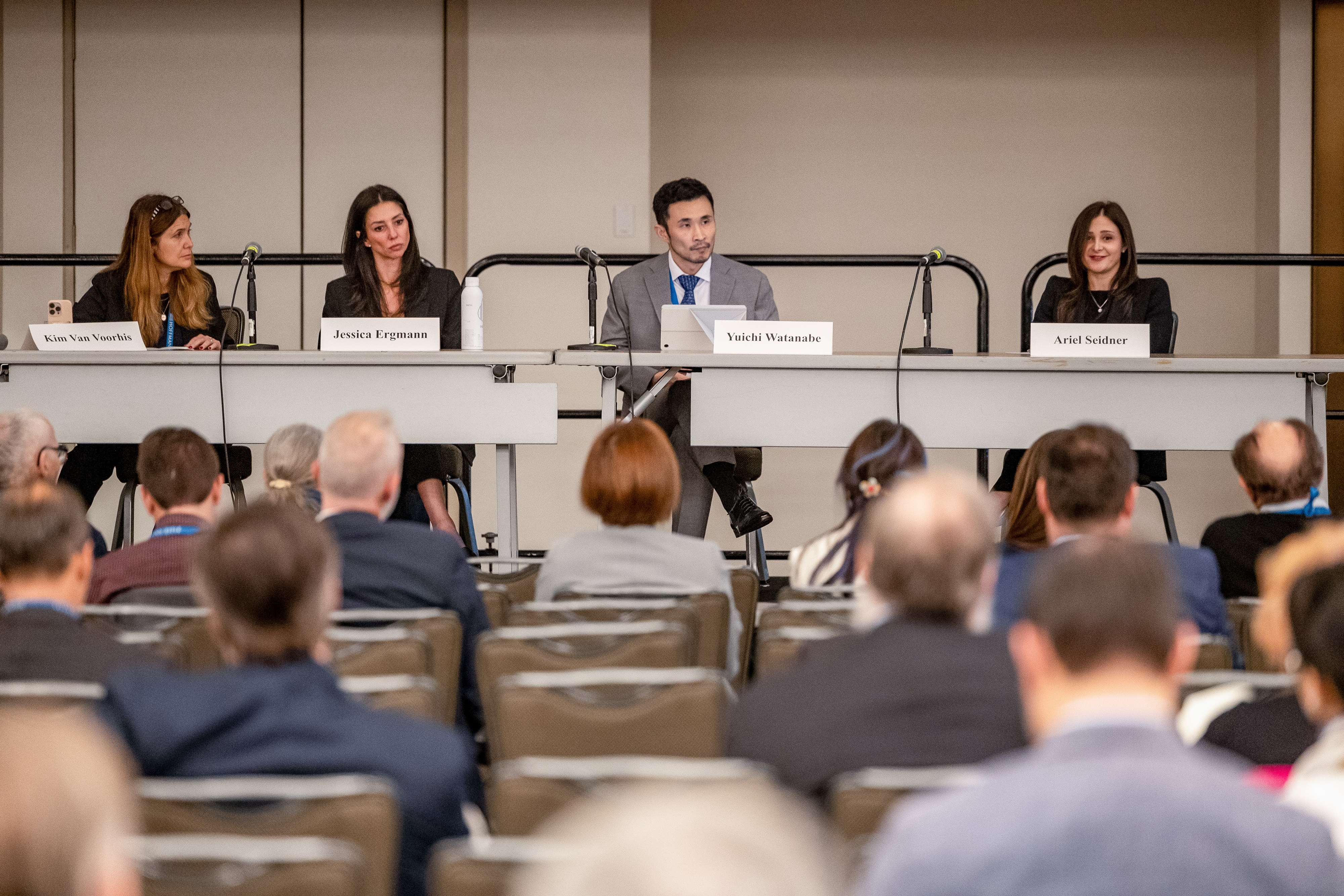
"Drafting fundamentals haven't necessarily changed, but it just requires more precision and clarity around the terms that we are drafting." — Jessica Ergmann, Sagacity Legal, AIPLA 2026 Annual Meeting
The panelists in the American Intellectual Property Law Association (AIPLA) IP License Agreements in an AI World session returned repeatedly to a single point: the principles of licensing have not changed, but the facts they now govern have. Over 45 minutes, the panel worked through what that means for patents, copyright, trademarks, likeness rights, and trade secrets, and closed with practical advice on where to press in a negotiation and where to give.
The day two session, held October 30 at the AIPLA 2026 Annual Meeting in Washington, D.C., was moderated by Kimberly Van Voorhis (Nike) and featured Jessica Ergmann (Sagacity Legal), Ariel Seidner (Duane Morris), and Yuichi Watanabe (Osha Bergman Watanabe & Burton). Van Voorhis opened by clarifying that the program was "not about using AI to draft license agreements" but about drafting agreements that involve AI. The panel used no slides, and Van Voorhis directed attendees to the panel's paper in the meeting materials for sample language.
The Grant Clause Comes First
Ergmann said a license cannot afford to be silent on AI, and that the work begins where it always has: identifying the assets and the rights granted in them. What has changed, she said, is that "the word use may not have the same meaning as it used to," and the same question now applies to terms such as "modify." Watanabe agreed, noting that AI can reach almost any IP license, including licenses of patents that have nothing to do with AI. "AI just gives you a different set of facts that are to be applied to those same basic principles," he said, adding that the wording of grant clauses in agreements signed before AI was contemplated will govern whether those licenses cover it.
Watanabe described three overlapping categories: licenses of an AI model itself, licenses of patents that claim AI, and licenses of patents covering inventions conceived or practiced with AI's help. Seidner added that contracts allow the parties to set their own rules at a time when existing IP frameworks are not always keeping pace.
Inventorship, Ownership, and Improvements
Turning to patents, Watanabe posed a hypothetical in which a scientist asks an AI tool to propose improved molecules, selects one, and confirms that it works. Whether she is an inventor depends on the facts, he said, but two rules are settled: "only a natural person can be an inventor," and the test is conception. He cautioned that "inventorship doesn't actually tell you who owns the new compound," since the scientist, the company, and the AI vendor may each claim it.
Ergmann said ownership of improvements is only one part of the analysis. Because AI models are constantly changing, she said, parties should define "improvement" for the specific deal, consider dividing improvements by type and allocating each, and address use and access rights, disclosure obligations, and audits.
Authorship, Fair Use, and Brands
Seidner said the Copyright Office's guidance means that material generated by AI, rather than by a human author, is not copyrightable, so a work-made-for-hire clause will not secure ownership of AI output. Parties should instead use the agreement itself to protect the rights they want in that output. On model providers' fair use arguments, she said courts have yet to give a clear answer, and that "fair use is ultimately a defensive strategy": "the only way to find out is to get sued and put up that defense."
On trademarks, Seidner said licensors should retain approval rights over brand assets that vendors and partners create, whether or not AI is involved, to avoid the risk of a naked license. For digital replicas of real branded goods, she said, the question remains: "is someone else exploiting my name or mark for commercial gain?"
Ergmann applied the same grant-clause analysis to name, image, and likeness. Citing the Pujols v. Rainbow USA Inc. dispute, she asked whether a release permitting the brand to edit and modify images in all media, now known or later developed, permits generating new AI images, observing that "all media" addresses where content may appear rather than what new content may be created. She suggested a defined "digital replica" term and flagged New York's Fashion Workers Act and California's digital replica rules. Seidner added that more states are treating replica provisions as unenforceable, or void from the start, unless AI replication is specifically identified.
Confidentiality and Audit Rights
Van Voorhis posed a hypothetical in which a client fine-tunes a vendor's model on its internal knowledge base, and a competitor later prompts the chatbot and obtains the client's pricing algorithm. Watanabe said such leaks are often inadvertent, but that a leak of licensed know-how could breach the license and end the licensor's trade secret protection. "The license should say which AI systems are licensed, which systems can accept such confidential or secret know-how, and whether it can be used or not to train models," he said.
Ergmann said a confidentiality clause states what a vendor promises, but "the architecture of the system itself" determines what actually happens, and counsel should ask whether a trade secret belongs in the system at all. Seidner described audit rights as "a double-edged sword," useful for visibility but potentially suggesting that the customer assumed responsibility for what it reviewed. Watanabe said audits must be balanced, and Ergmann suggested an immediate audit right after a data breach or security incident.
Negotiating With Limited Leverage
Asked what to hold and what to concede, Ergmann said the starting point is the value of the deal: "if the exposure outweighs the value then it may not make sense." She said responsibility should follow control, so that a customer controlling the prompts may reasonably bear more of the output risk, and a party seeking to own outputs may need to accept more indemnity exposure. Watanabe said licensees should press for representations on facts only the licensor can know, including that each named inventor is a natural person who contributed to conception and "didn't just throw a bunch of data in to an AI agent or an AI tool." Van Voorhis, speaking as an in-house client, urged counsel to "make sure you know what your clients really, really want out of a deal."
In a closing lightning round, Seidner said that "however you currently understand IP it will be challenged," and Watanabe advised attendees to "draft and review your license agreements with AI in mind." Ergmann's takeaway echoed the panel's opening: identify the assets and uses, and "allocate risk to the party that's best positioned to control it."
 Panel on AI as Patent Drafter Weighs Quality Testing, Portfolio Discipline, and the Economics of Outside Counsel
Tim Bright, Bright-Line IP
"AI, to me, by definition, should be based on outcome-based pricing." — Micheal Binns, ADAPT. Legal, AIPLA 2026 Annual Meeting
The first panel of the first CLE track at the American Intellectual Property Law Association (AIPLA) 2026 Annual Meeting in Washington, D.C. took up a question its moderator said he had been looking forward to discussing for about ten years: what happens to patent practice once AI can draft? The discussion that followed dwelt less on whether the tools work than on how organizations measure them, where they still draw lines, and what lower drafting costs mean for portfolios and for the firms that serve them.
The session, AI as a Patent Drafter, Prosecutor, and Strategist: Tool or Risk?, was held October 29. Ian Schick, PhD, Esq (Paximal) moderated a discussion among Micheal Binns (ADAPT. Legal), formerly head of patents and trade secrets at Meta; Steve Gong (Google); and Toni Nijm (Anaqua). The panel used no slides, and the session ran as an open discussion.
From Pilots to Production
Drawing on work with close to 5,000 organizations over more than 20 years, Nijm offered a framework of three stages: experimentation and piloting, some specific form of production, and actual enterprise transformation. "Everyone is stuck in the first and second phase," Nijm said, adding that individual users are seeing gains but organizations are not yet seeing a broad return on investment.
Binns described the same tension from both sides of the billing relationship. As a law firm partner and later at Meta, he said, he saw a standoff between holding outside counsel fees steady and finding efficiencies that could make the arrangement a win-win. Since leaving Meta about two months before the meeting to launch a startup, he has used AI to draft his company's patent applications, but said he still relies on law firms "to proofread, to help evaluate, to bolster the applications, but the costs are cheaper."
Measuring Quality
Gong described an internal patent drafting tool that Google built with its product team more than two years ago, and a study the company conducted once the tool was in the hands of more than 150 users. The study examined skill acquisition and work-product quality. Its headline finding, he said, was that "it does increase quality," while affecting skill development "very differently based on your experience level": experienced practitioners gained skills through the tool, while early-career practitioners who lost access to it showed no gain.
Asked by Schick how teams handle quality control and accountability, Gong described A/B testing in which a human-drafted application and an AI-drafted application go to independent graders, with results that he said came out "overwhelmingly" in favor of the AI drafts. He added that drafts written entirely by humans contain errors as well, and that the volume of feedback from such reviews has itself become difficult to manage. On hallucinations, raised by Binns, Gong said the problem has not gone away but has improved considerably.
Claims and Portfolio Discipline
Schick framed patents as "functional documents" that "perform a job for the client," and asked whether the panel's views extended to claims. Gong said Google has found AI useful for claim strategy, not only for routine drafting tasks, and that "AI can actually have tremendous value" even on the highest-value parts of an application. Binns drew a firmer line: at Meta, he said, the claims were "never something we got to that we felt comfortable outsourcing" to AI.
Where Binns did find AI valuable was in keeping a portfolio tied to the business. He said Meta used AI to "dial in the portfolio," and that the tools help hold a consistent through line between a patent and the use case the company needs it to cover. He cautioned that an allowable claim narrowed to a single use case offers little, saying "that's not valuable to the company," while acknowledging that judgment calls still arise during prosecution.
Build, Buy, and Trade Secrets
On build versus buy, Nijm said organizations are still experimenting, sometimes building internal tools and agents before abandoning them to buy, and sometimes the reverse. Nijm expected most organizations to buy tools for specific tasks while building and owning the governance around them. Binns said Meta built an internal tool for defensive publications but said he would probably lean toward buying a full drafting tool, because a business is unlikely to commit the data and resources needed to build one.
Gong said the question itself has changed: with foundation models and coding agents now capable of a great deal, the issue is what to buy and what to build, rather than a choice between buying or building a large system. He noted that maintenance, long the hidden cost of building in-house, has become easier. Binns, for his part, said a significant trade secret strategy should always be considered, particularly where AI is involved, and that Meta increased its trade secret filings and defensive publications alongside its use of AI.
Pricing, Volume, and the Next Generation
Schick asked what happens to volume when the cost of producing an application falls. Binns said Meta both reduced costs and reduced the size of its portfolio, producing "a significant reduction" in outside counsel spend, and that the firms that fared best were "creative in their outcome-based pricing." If the quality meets expectations, he said, "you pay for the outcome, not for the time." Binns, citing figures Gong had mentioned, described a 40 percent increase in innovation at Google set against a 30 percent reduction in outside counsel spend, which could leave spending roughly flat. Gong agreed that this is the case being made, given what he described as an unprecedented rate of innovation.
Binns also turned to the profession's pipeline. He and Gong co-founded ADAPT. Legal, a nonprofit focused on bringing younger people into intellectual property careers, which he said has observed a decline in patent bar registrants. "I don't think that we're entering into a world where there will be no attorney involved," he said, adding that the firms that leaned into technology were the ones that continued to receive work.
Nijm closed on value beyond the draft. Asked by Schick what the market is getting wrong, Nijm said there is too much focus on producing the text of an application, and that the more important question is "what's the commercial value of that text?" Nijm described a likely unbundling of the drafting process, with different parts of an application handled by different providers. Nijm also pointed to the context lost each time work changes hands as a problem a more systematic approach could address, though Nijm said that approach has not yet arrived.
 OED Director Kimberly Kelleher on AI, Filing Fraud, and Why a Signature Still Has to Mean Something
Tim Bright, Bright-Line IP
"They're expecting your signature to mean something on documents... AI is just kind of reminding us of that." — Kimberly Kelleher, Director, USPTO Office of Enrollment and Discipline, AIPLA 2026 Annual Meeting
Ethics is rarely the sexiest slot on an IP conference program. At an annual meeting where AI drafting and licensing filled the rooms, the ethics session on the final day, which fell on Halloween, had more competition than most. Kimberly Kelleher (Kimberly K.) , Deputy General Counsel for Enrollment and Discipline and Director of the USPTO's Office of Enrollment and Discipline, made it worth the stay. Presenting alone ("60 minutes is a long time for just me to talk," she said), she walked through how OED operates, where AI fits into the existing rules, and the filing-fraud schemes that are drawing practitioners into discipline. She delivered it all with practical tips and plain-spoken guidance, then offered the audience chocolate.
The session, An Update from the USPTO OED: Recent Cases and Rules, was held October 31 at the American Intellectual Property Law Association (AIPLA) 2026 Annual Meeting in Washington, D.C..
How OED Works
OED's jurisdiction under 37 C.F.R. § 11.19 reaches patent attorneys, patent agents, trademark attorneys, and people who represent others before the Office without authorization. Kelleher reminded the audience that practice before the Office, defined in § 11.5, includes consulting with or advising a client in contemplation of filing; a practitioner need not file anything to be practicing. Practitioners may use non-practitioner assistants, she said, but they are responsible for training them, and an assistant's misconduct can be attributed to the practitioner.
She also explained two forms of discipline that are worth knowing. Under reciprocal discipline (§ 11.24), OED can impose discipline based on a state bar's action, usually on the documentary record alone. Practitioners must report public discipline within 30 days, and Kelleher said it pays to do so promptly: a suspension OED discovers months later is imposed from that point, so it does not run concurrently with the state's. The Office has no permanent disbarment; its counterpart, exclusion, is effectively a five-year suspension, and some excluded practitioners have met the stringent criteria for reinstatement. A conviction of a serious crime, typically a felony, leads to interim suspension under § 11.25.
Kelleher said she includes a slide on requests for information "to kind of take the anxiety out" of receiving one. An RFI typically follows a grievance. "We are neutral. We are not biased. We are just trying to get your side of the story," she said. The rules require "a complete, thorough, and candid response," and failing to respond is itself grounds for discipline under § 11.801(b). Practitioners who need more time should ask the staff attorney who issued the RFI. "We do it a lot," she said.
AI: The Existing Rules Already Apply
There is currently no prohibition on using AI to draft documents and no duty to disclose its use, Kelleher said, although she did not rule out that the disclosure question could return. The USPTO's 2024 guidance remains good and is worth reading, and the Office has no plans to amend its ethics rules for AI because, in her words, "the rules cover these situations."
The rule she returned to most was § 11.18, which certifies that a filing rests on an inquiry reasonable under the circumstances. Clients pay practitioners to review what AI produces, she said: "They're expecting your signature to mean something on documents." In her view, "AI is just kind of reminding us of that." She added a note on compact prosecution: examiners report that submissions that once ran two pages now run to "hundreds of pages," much of it from pro se applicants. She also flagged the varied state-bar guidance, which ranges from suggesting that competent representation requires using AI to cautioning against relying on it.
Asked to look ahead ("if I had a crystal ball"), Kelleher predicted that fees will be the next AI ethics issue OED sees. Practitioners should consider how they pass on the cost of AI tools, how they account for time AI saves, and how they explain both to clients, because "communication and fees are hand in hand."
Two Hallucination Cases
"No surprise here, they're hallucination cases," Kelleher said of OED's two AI-related decisions. In In re Matos (D2025-13), which she called "an AI adjacent case," a practitioner filed a TTAB brief citing nonexistent cases and cases that did not support the propositions for which they were cited. He conceded that he did not read the cases or check the citations, and he received a public reprimand and was required to take CLE on generative AI.
In re Mitchell (D2026-16) involved claim-construction submissions in federal court. The practitioner used one AI tool to draft and a second to check the first, and both produced erroneous citations to the specification, figures, and prosecution history. "He used two different tools, hoping that one would check the other," Kelleher said. As her "computer friends" remind her, "AI wants to please you." She noted that Mitchell promptly corrected the record and asked that his client not be penalized for his errors; he received a public reprimand.
Mitchell is the more instructive of the two. It shows that a second model is not a substitute for checking a citation against the source document, and the deck's own summary says the material "was not sufficiently checked against source documents."
Filing Fraud and the Practitioners Caught in It
The larger share of the session addressed the surge in fraudulent trademark and patent filings, in which practitioners, Kelleher said, "have gotten trapped," some knowingly and some not. The relevant obligations include § 11.18, the U.S. Counsel Rules (for trademarks since 2019, and for patents more recently), the signature rules, and the USPTO.gov account rules. On signatures, she was blunt: the named signatory must personally enter the signature, even an electronic one, and authorizing a paralegal or associate to do it does not suffice. "It's not allowed, okay?"
Sponsoring USPTO.gov accounts for staff requires that the sponsored person be directly employed by the practitioner and supervised by the practitioner, and that access be cut off when the person leaves. Answering an audience question, Kelleher clarified that supervision does not require a hiring-and-firing relationship; it concerns the work product and responsibility for it.
The cases illustrated the stakes:
- Morton was counsel of record on more than 32,000 trademark applications that a foreign entity funneled through his name. He received a three-year suspension with two years of probation and has since been readmitted.
- Hom had others enter his signature on thousands of trademark filings and did not verify specimens. He received a two-year suspension and has also been readmitted.
- Jie Yang was named as signatory on approximately 4,000 patent documents that others had signed. She received a public reprimand and probation.
- Okeke was a newly licensed attorney who sponsored accounts for a foreign company's staff and did not supervise them. The schemes, Kelleher said, deliberately target new attorneys and lawyers outside IP. Okeke self-reported and received a 30-day suspension.
- Huang sponsored a foreign firm's employees, who filed more than 400 applications in two months. She received a 90-day suspension.
Kelleher noted that many of the cases were resolved by settlement, which she said lets OED reach an appropriate outcome without the added stress of a hearing. Being counsel of record on a large volume of applications, or being asked to sponsor accounts for a foreign firm, is not prohibited, but "your spidey senses should be tingling," she said.
Protecting Yourself
Her most practical tip was to search TMSearch for one's own name as attorney of record, a check worth running even for lawyers who never file trademarks. People have come to the Office, she said, asking why, as an employment lawyer, they appear on trademark applications. Misuse can be reported to TMScams@uspto.gov or PatentScams@uspto.gov, and suspected fraud can be reported to the FTC through a USPTO-specific link. For ethics questions, OED keeps an attorney of the day on call. OED cannot give advice or formal opinions, she said, but it can point a caller to the relevant rules and cases. Asked whether OED fines practitioners, she explained that its jurisdiction extends only to the license to practice.
 Pro Bono Panel Traces the Patent Program's Origins and the Rules That Travel With Every Referral
Tim Bright, Bright-Line IP
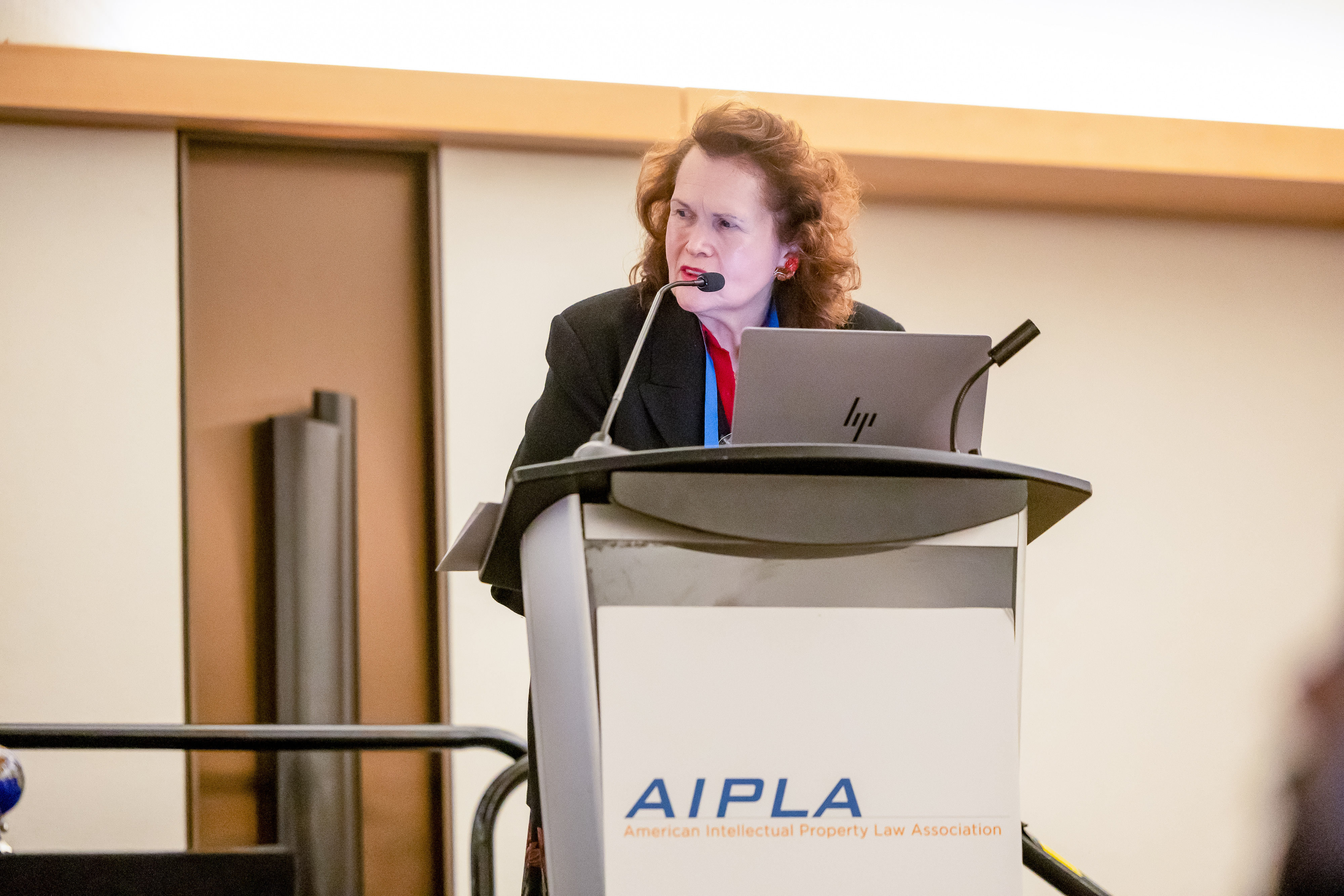
"If you volunteer, you're not going to be voluntold." — Grant Corboy, USPTO Office of Enrollment and Discipline, AIPLA 2026 Annual Meeting
The USPTO's Patent Pro Bono Program is a referral network, not a separate ethical regime. That was the thread running through the American Intellectual Property Law Association (AIPLA) ethics session The Ins and Outs of Pro Bono, where the panelists traced how the program was built, explained what a regional program's screening does and does not establish, and reminded volunteers that the duties owed a pro bono client are the same duties owed any other.
The session, held October 30 at the AIPLA 2026 Annual Meeting in Washington, D.C., was moderated by Georgann Grunebach (The Law Offices of Georgann S. Grunebach), chair of AIPLA's Pro Bono Committee, and featured Grant Corboy (USPTO Office of Enrollment and Discipline), Stephen Maebius (Foley & Lardner), and Kirk Damman (Lewis Rice), a member of the Pro Bono Advisory Council. Grunebach, a longtime corporate practitioner, framed the work in terms of where innovation starts: "Where do those corporations come from? They come from visionaries, from entrepreneurs."
From a Minnesota Pilot to Fifty States
Grunebach traced the program from Minnesota's LegalCORPS pilot through Section 32 of the America Invents Act in 2011 to fifty-state coverage in August 2015. That coverage, she said, has "been maintained rather than guaranteed." AIPLA "treats pro bono services as a matter of professional responsibility," she said, while ABA Model Rule 6.1 "is aspirational and not disciplinary" and the USPTO's rules contain no counterpart. Grunebach signed for AIPLA at the October 2013 Dolley Madison House ceremony establishing the Pro Bono Advisory Council.
"Very simply, it's a referral service," Corboy said. Section 32 directs the USPTO to "work with and support" regional programs, making its role "to be a cheerleader." He announced that a new organization would cover Florida after a regional program withdrew in February 2026, with gradual expansion to Puerto Rico by the end of 2027. Corboy described the 2015 network as 19 regional programs and introduced the Florida development by telling attendees, "you guys are the first to hear this."
Who Does What
Corboy distinguished the partners' roles. The Pro Bono Advisory Council handles fundraising, malpractice-insurance issues, and a handbook for regional programs. The USPTO collects metrics and recognizes participating practitioners and firms, but gives no legal advice because it also examines applications. Practitioners contributing 50 or more hours in a year can receive USPTO certificates. The regional organizations include universities, lawyers-for-the-arts groups, and bar associations.
Regional programs screen and match applicants. Many offer brief advice clinics for practitioners unable to undertake a full representation. Volunteers, including in-house counsel, firm lawyers, retirees, and patent agents, are "the linchpin," Corboy said.
He also highlighted the PTAB Pro Bono Program, the TTAB clearinghouse recognition program, and law-school clinics. Across the referral programs, "Qualifying does not guarantee a match." A volunteer must choose the case. Corboy described the PTAB program as serving ex parte appeals and said the Law School Clinic Certification Program had about 70 certified clinics and was seeking more.
What Screening Does, and Does Not, Establish
Corboy said applicants "are rigorously vetted before they are matched with an attorney," with income thresholds varying "anywhere between 200% and 400% of the federal poverty guidelines depending on the program." He described a six-module training course; USPTO guidance also recognizes an application already on file as evidence of patent-system knowledge, subject to regional requirements. Programs seek an actual invention, not merely an idea, while avoiding confidential details during screening. Advising an inventor to do more work before filing can prevent "throwing good money after bad," he said. Residency requirements also prevent applicants from shopping between programs.
Maebius said the Federal Circuit Bar Association's program, covering Virginia, West Virginia, and the District of Columbia, uses a 300% threshold. Volunteers must still check party and subject-matter conflicts and assess whether their firms can handle the matter. "There's always more pro bono applicants than there are volunteers," he said. His firm encourages participation through billable credit. A case may arrive with a provisional application already filed, making the volunteer's assessment of capacity and scope especially important. Some states also offer CLE credit for pro bono work.
The Same Rules Apply
"There are no separate rules," Corboy said; "the professional obligations, they continue." Under 37 C.F.R. § 11.102(c), representation may be limited, for example, to preparing and filing an application, if the limitation is reasonable and the client gives informed consent. A match can be "a two-year commitment sometimes," he noted. He recommended recording the scope and endpoint in writing and coordinating with the regional program so clients are not stranded. Program intake is "not a conflict check," he stressed, pointing to Maling v. Finnegan as a guide to conflicts and firm-wide imputation.
Corboy distinguished § 11.108(e) from the program requirement that applicants acknowledge responsibility for USPTO fees, "a condition of the applicant's participation." He recommended including that responsibility in engagement letters. The condition is distinct from the rule's exceptions allowing certain practitioner-paid or advanced expenses. Maebius said his firm's standard engagement letter makes the same allocation of fee responsibility.
"My favorite way to get terminated is when you're discharged," Corboy said, recommending engagement letters specify when representation ends. Nonpayment or difficulty reaching a client may provide withdrawal grounds depending on the circumstances and § 11.116, including reasonable warning where required. Withdrawal remains subject to applicable notice or permission requirements and duties to protect the client under § 11.116(c)–(d). He asked volunteers ending representation mid-prosecution to notify the regional program.
When the Client Needs More Than a Patent
"Most prosecution clients don't just need prosecution help," Damman said. Copyright, trademark, and corporate questions often arise, making it important to "make sure you get that scope in writing." Partner organizations can handle referrals outside the engagement; patent agents cannot undertake that other work themselves. One early client, he said, obtained several patents, aged out of micro-entity status, and pursued SBIR funding. He pointed to university trademark and small-business programs and arts organizations as potential referral partners, allowing volunteers to recognize a client's broader needs without silently expanding an engagement beyond their expertise or, for patent agents, their authority to practice.
Maebius described the reward as "the chance to help individual entrepreneurs" who are "pursuing something that they kind of view as a dream," citing a client's hook-free fishing tackle system. Damman showed Missouri students' automated bee feeder, now the subject of a pending application. "The prototype, by the way, was made out of Lego," he said.
Recognizing the Volunteers
The session closed with recognition of members contributing more than 50 hours. Grunebach said ten qualified for 2025. In-room recipients were Professor Mimi Afshar, receiving her second award; Robert Mulligan; and Maurice Williams. Damman was also recognized as a first-time recipient.
 Upcoming Events
 Upcoming Webinars
 New Members

Upcoming Events
-
 AIPLA CLE Webinar: Discovery in AI Patent Litigation
November 10, 2026 1:00 PM to 2:30 PM | Up to 90 Minutes CLE Eligible
-
 AIPLA CLE Webinar: Data and Market Exclusivity: An Update on China’s New Law and Comparisons to the US and Europe
November 19, 2026 10:30 AM to 12:00 PM | Up to 90 Minutes CLE Eligible
-
2027 Global IP and Trade Summit
January 27 to 29, 2027
We’re excited to welcome you to the 2027 AIPLA Global IP and Trade Summit, where innovation, technology, and intellectual property come together to shape the future. We are ready for your ideas, energy, and passion for IP! -
2027 Spring Meeting - Denver, CO
May 6 to 8, 2027
We’re excited to welcome you to the 2027 AIPLA Spring Meeting, where innovation, technology, and intellectual property come together to shape the future. Denver is ready for your ideas, energy, and passion for IP! -
AIPLA 2027 Annual Meeting
October 28 to 30, 2027
Join us as we bring IP professionals together to learn and connect. More information coming soon! The 2027 Annual meeting will take place at the Westin Washington, DC, Downtown. Leadership Meetings on Wednesday, October 27. Programming scheduled October 28 - 30.