
2023 Spring Meeting
In This Section
Over 400 intellectual property practitioners joined AIPLA in Seattle for the 2023 Spring Meeting for three days of CLE, networking, and celebration. We were joined by USPTO Director Kathi Vidal, who addressed a wide range of issues from the recent ANPRM and harmonization, to DOCX, the patent Pro Bono Program, and more. Executive Vice President and General Counsel for the Seattle Kraken, Lance Lopes, and former Vice President and Chief Litigation Counsel at Apple, Noreen Krall, were our keynote luncheon speakers. Our top-notch CLE sessions covered hot topics in IP, including diversity in the wine industry, fair use in filmmaking, non-competition covenants in the age of remote and hybrid work, trademark and the use of AI tools, and more.
To read an article, please click on the down arrow to the right of the article title.
 President's Message - Brian H. Batzli – Spring 2023
Brian H. Batzli

 USPTO Director Kathi Vidal Addresses Diversity, Progress, and Innovation During the Opening Plenary

Under Secretary of Commerce for Intellectual Property and Director of the U.S. Patent and Trademark Office, Kathi Vidal, addressed AIPLA’s 2023 Spring Meeting in Seattle.
 AIPLA Toasts to the Future of Diversity in the Wine Industry

The Spring Meeting’s Diversity Plenary showcased the Washington State wine industry and barriers to inclusion that exist for minority winemakers. The plenary was moderated by Elizabeth Dougherty, the Eastern Regional Outreach Director for the U.S. Patent and Trademark Office, and featured three experts in the industry, Melissa Hansen, who serves as the Research Program Director for Washington State Wine; Katja Loeffelholz, an IP Attorney at Dickenson Peatman & Fogarty in Napa, CA; and Phil Long, the Founder and Winemaker at Longevity Wines, and President of the Association of African American Vintners.
Hansen opened by painting a picture of the current state of the wine industry in Washington. She noted that 90% of wineries in the state are small, family-owned businesses, and that much of the focus at Washington State Wine is around research, be it sustainable pet control, climate change, water usage, or recycling.
Loeffelholz walked the group through the intellectual property ramifications and requirements for producing wine, explaining that trademarks, copyrights, trade dress, and design patents all play a role in bottling wine. A winemaker must seek trademark protection for the brand name, vineyard designation, tagline or slogan, and certification and service marks. Loeffelholz noted that wineries will often hire an independent contractor to design the label and bottle, and while the winery has a license to use the copyrighted design on the bottle, the intricacies of copyright law come into play if the winery wants to produce branded merchandise, such as a t-shirt or hat.
Long closed noting the importance of IP in the business, stating that, had he not done the “correct things with IP, I wouldn't be here today doing what I do.” Long then put his product and expertise on display with a wine tasting during the Diversity Committee’s business meeting.
 Ethics and Espresso: Ethics Training Focused on Practice Before the USPTO and PTAB
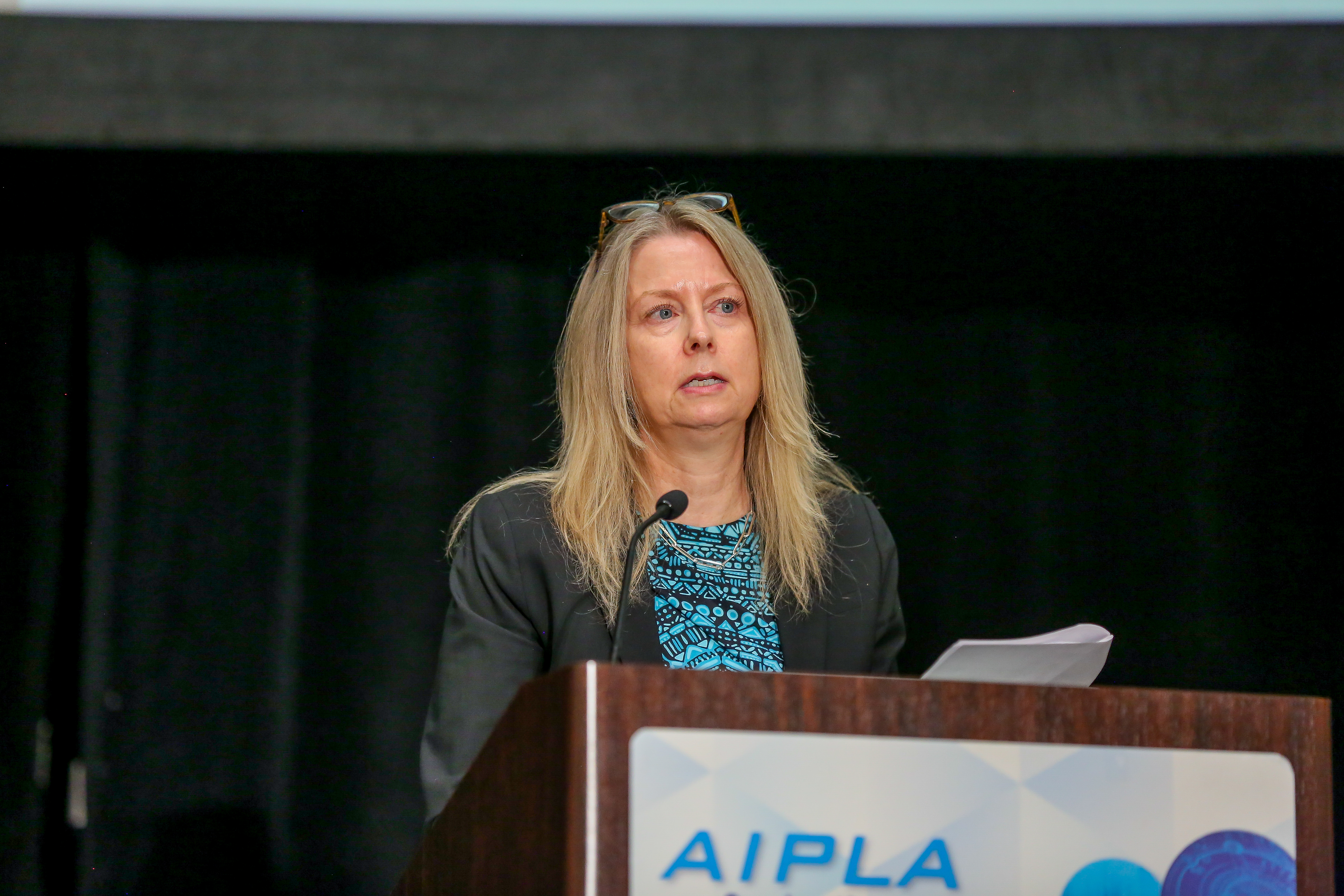
The takeaway from the ethics plenary- be a good, upstanding practitioner who abides by the morals and ethics of law and practice before the U.S. Patent and Trademark Office. Dahlia George from the Office of Enrollment and Discipline (OED) at the USPTO, and Judge Jacqueline Wright Bonilla of the PTAB outlined requirements for ethical practice before the USPTO and PTAB and the consequences for failure to do so.
George opened by explaining what constitutes practice of law before the PTAB and the mission of the OED, which is to not to go after practitioners for every misdemeanor or infraction, a point she emphasized throughout the hour. The goal of OED in George’s words is about “protecting the profession and the public,” because if you have a practitioner who isn't up to snuff, the public gets hurt.” On how an investigation gets opened, George explained that most complaints come to them externally, meaning the OED is not on a witch hunt for unethical practitioners. Most cases, she explained, come from opposing counsel, clients, or from within the subject's firm. Investigations begin with a Request for Information (RFI)- something George cautioned against ignoring because it allows for fact gathering from all sides. Many complaints either go away after examination or the subject will receive a confidential warning. Only serious misconduct results in going before a panel. George also noted the high standard of proof the OED must provide- clear and convincing, and cases face a one-year statute of limitations, per the AIA.
George also touched on the OED Diversion Pilot Program, noting that rehabilitation is always the first step for someone coming before the OED.
 SM23 Photos
 Upcoming Events
 Upcoming Webinars
 New Members

Upcoming Events
-
2026 AM IP Practice in Japan Pre-Meeting
October 27 to 28, 2026
The Pre-Meeting is open to all and is a great event for networking with colleagues from Japan and other countries. Presentations will be provided by the speakers from AIPLA, the Japan Patent Attorney Association (JPAA), and possibly from the International Association for the Protection of the Intellectual Property in Japan (AIPPI-J), Japan Trademark Association (JTA) and Japan Patent Office (JPO) on a range of topics -
.png?sfvrsn=ababee26_1 "AM26 Sq (1)") AIPLA 2026 Annual Meeting
AIPLA 2026 Annual Meeting
October 29 to 31, 2026
-
2026 Annual Meeting
October 29 to 31, 2026
-
 AIPLA CLE Webinar: Discovery in AI Patent Litigation
November 10, 2026 1:00 PM to 2:30 PM | Up to 90 Minutes CLE Eligible
-
 AIPLA CLE Webinar: Data and Market Exclusivity: An Update on China’s New Law and Comparisons to the US and Europe
November 19, 2026 10:30 AM to 12:00 PM | Up to 90 Minutes CLE Eligible